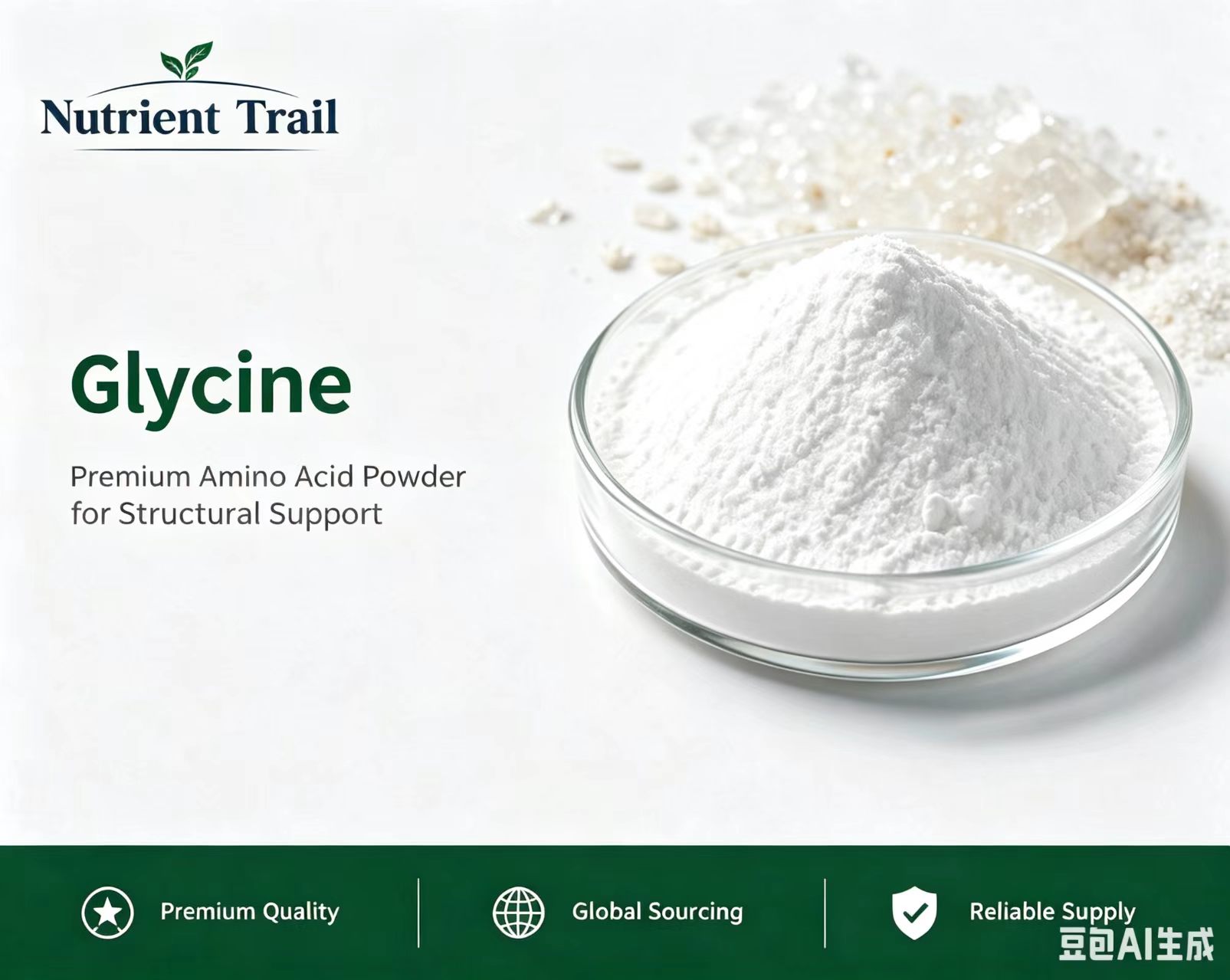
Glycine
The Versatile Conditionally Essential Amino Acid Powering Multi-Dimensional Wellness
Product Specifications
|
Item
|
Specification
|
|
Product Name
|
Glycine
|
|
Abbreviation
|
Gly
|
|
Other Name
|
Aminoacetic Acid
|
|
CAS Number
|
56-40-6
|
|
Molecular Formula
|
C₂H₅NO₂
|
|
Molecular Weight
|
75.07
|
|
Appearance
|
White Crystalline Powder, With Unique Sweet Taste
|
|
Assay
|
≥99%
|
|
Test Method
|
HPLC
|
|
Shelf Life
|
24 Months
|
|
Storage Condition
|
Store in a Cool, Dry Place, Keep Sealed and Away From Direct Sunlight
|
|
Why Is Glycine So Popular?
The growing popularity of Glycine is closely linked to increasing scientific interest in amino acids that support foundational physiological functions across hundreds of biological processes throughout the body. Glycine plays an essential role in:
-
Collagen and structural protein synthesis
-
Neurotransmitter regulation and sleep quality maintenance
-
Body detoxification and glutathione production
-
Joint and connective tissue health support
-
Metabolic and cardiovascular function regulation
Research has shown that while the human body can synthesize small amounts of Glycine on its own, endogenous production often cannot meet the full physiological demand, especially as people age or under high-stress states. As a result, scientists and nutritional health practitioners have widely recognized Glycine as a conditionally essential amino acid that requires appropriate external supplementation. This connection between Glycine and fundamental bodily maintenance has made the ingredient a cornerstone of modern multi-functional wellness formulations.
Key Benefits of Glycine
✅ Supports Collagen Synthesis and Joint Health
Glycine makes up nearly one third of the amino acid composition of human collagen. It provides necessary raw materials for the synthesis of collagen and elastin in skin, tendons, ligaments and articular cartilage, helping maintain the elasticity and thickness of the skin, reduce joint wear, and support long-term musculoskeletal health.
✅ Promotes Healthy Sleep and Cognitive Calm
As an inhibitory neurotransmitter in the central nervous system, Glycine can regulate overexcited nerve activity, reduce mental stress and anxiety, significantly improve sleep quality by shortening the time to fall asleep and reducing nighttime awakenings, while helping maintain a clear, non-groggy mental state the next day.
✅ Powerful Detoxification and Antioxidant Support
Glycine is a core raw material for the body to synthesize glutathione, one of the most important endogenous antioxidants. It can help the liver break down and excrete harmful metabolic wastes and exogenous toxins, effectively enhancing the body's free radical scavenging capacity and reducing oxidative damage to cells.
✅ Supports Cardiovascular and Metabolic Wellness
Emerging research continues to explore the relationship between Glycine metabolism, blood pressure regulation, and cardiovascular protection. Appropriate intake of Glycine helps improve blood lipid profiles, reduce the burden on the cardiovascular system, and maintain stable normal metabolic levels.
✅ Supports Active Lifestyle Formulations
Because of its role in muscle tissue repair and post-exercise recovery, Glycine is frequently included in products designed for active adults who engage in regular fitness training, helping reduce post-workout muscle soreness and accelerate tissue recovery.
Applications
Glycine is widely used across multiple product categories within the global health and wellness industry, including:
-
Joint and Connective Tissue Health Supplements
-
Sleep Support and Calming Wellness Formulas
-
Skin Beauty and Collagen Building Products
-
Liver Detoxification and Antioxidant Supplements
-
Sports Nutrition and Post-Workout Recovery Products
-
Premium Daily Nutritional Complex Formulations
-
Amino Acid Compound Blend Products
-
Special Dietary Foods for Clinical Nutritional Support
Common dosage forms include:
Capsules, Tablets, Powder Blends, Stick Packs, Functional Beverages, Gummies, Amino Acid Compound Granules
Glycine vs Other Common Amino Acid Ingredients
While the amino acid supplement category continues to expand, Glycine remains one of the most recognizable, high-safety and cost-effective ingredients available today:
|
Ingredient
|
Primary Function
|
|
Glycine
|
Conditionally Essential Amino Acid, Multi-system Foundational Support
|
|
L-Glutamine
|
Intestinal Barrier Health and Immune Support
|
|
Creatine Monohydrate
|
Muscle Energy Supply and Sports Performance Improvement
|
|
GABA
|
Neurotransmitter Regulation and Mood Calming
|
|
Collagen Peptides
|
Exogenous Supplementary Source of Collagen-derived Amino Acids
|
|
Taurine
|
Osmotic Pressure Regulation and Cellular Protection
|
|
Many brands combine Glycine with complementary ingredients such as magnesium, collagen peptides, and B vitamins to create comprehensive wellness formulations targeting sleep improvement, joint care or post-exercise recovery scenarios.
Market Opportunity
The global foundational amino acid and preventive health market continues to experience strong growth as consumers increasingly prioritize long-term wellness and all-round basic physiological maintenance strategies. Several trends are fueling rising demand for Glycine:
-
Growing public awareness of the value of conditional essential amino acid supplementation
-
Continuous expansion of the joint health and sleep support supplement categories
-
Widespread rise in consumer demand for multi-scenario, science-backed basic nutritional ingredients
-
Increased focus on skin beauty and post-workout recovery among young consumer groups
-
Wide application demand for high-safety, low-side-effect natural nutritional ingredients
As a result, Glycine remains one of the most commercially attractive ingredients for brands developing next-generation diversified wellness products covering the whole age population.
Frequently Asked Questions
1.What is Glycine?
Glycine, also known as aminoacetic acid, is the simplest conditionally essential amino acid in the human body. It is widely distributed in various tissues and organs, and participates in the synthesis of multiple key substances and hundreds of physiological regulation processes.
2.Is Glycine naturally found in food?
Yes. Rich natural sources of Glycine include high-protein foods such as animal skin, bone broth, meat, fish, shellfish, legumes and dairy products. You can also obtain a certain amount of Glycine through a balanced daily diet.
3.What are the differences between Glycine and GABA?
Glycine not only has the effect of calming the nervous system and improving sleep, but also provides comprehensive support for collagen synthesis, liver detoxification and joint health. Its physiological functions cover a wider range of bodily systems compared to GABA which mainly targets nervous system regulation.
4.What formulations can Glycine be used in?
Glycine is highly suitable for capsules, tablets, powder blends, stick packs, gummies, functional beverages and various compound amino acid formulations. Its natural sweet taste also greatly improves the flavor experience of oral products.
5.What purity level is typically available for commercial Glycine products?
Premium food and dietary supplement grade Glycine is commonly produced at purity levels of 99% or higher, which meets the strict quality requirements of various high-end wellness products.
Looking for a Reliable Glycine Supplier?
As demand for multi-functional amino acid health products continues to grow, ingredient quality, batch consistency, and supply reliability have become increasingly important for supplement brands and manufacturers.
Nutrient Trail supplies high-purity Glycine designed for dietary supplement, functional food, beverage and special diet food applications. Comprehensive technical documentation, including complete product specifications, COA, and quality-related certification information, is available to fully support your product development and commercialization process.