Copper Gluconate
Premium Trace Mineral Ingredient Solutions for Global Food Nutrition, Dietary Supplement & Personal Care Industries
Product Specifications
|
Item
|
Specification
|
|
Product Name
|
Copper Gluconate (Copper(II) Gluconate)
|
|
Abbreviation
|
Copper Gluconate
|
|
CAS Number
|
527-09-3
|
|
Molecular Formula
|
C₁₂H₂₂CuO₁₄
|
|
Molecular Weight
|
453.84
|
|
Appearance
|
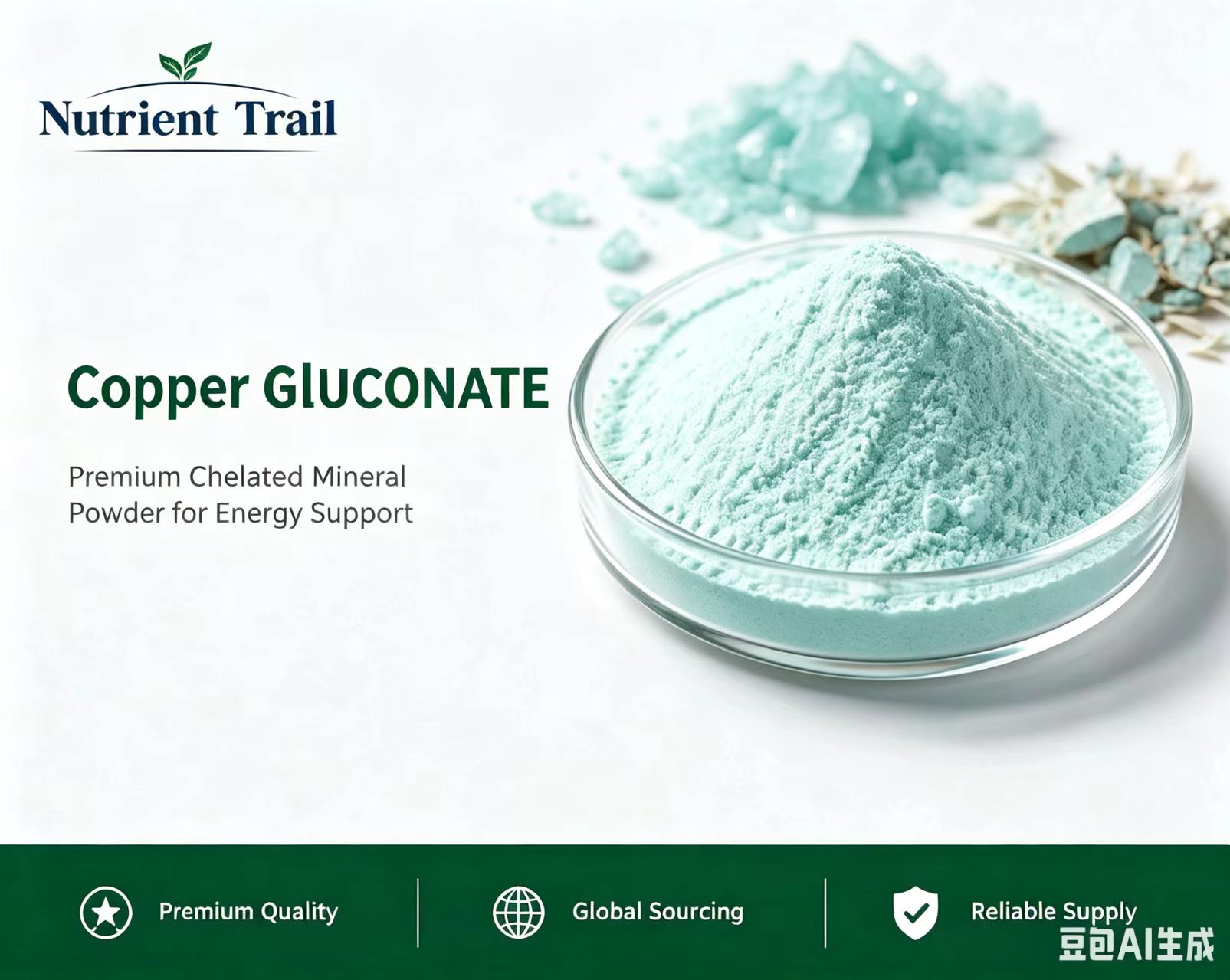
Light Blue to Blue-Green Crystalline Fine Powder
|
|
Assay
|
≥99% (Food/Feed Grade), ≥98% (USP/EP/BP Pharmacopoeia Grade)
|
|
Copper Content
|
~14%
|
|
Solubility
|
Easily soluble in water, extremely slightly soluble in ethanol
|
|
Density
|
1.763g/cm³
|
|
Shelf Life
|
24 Months
|
|
Storage Condition
|
Store in a Cool, Dry, Ventilated, Clean Place, sealed away from toxic and harmful substances
|
|
Why Is Copper Gluconate So Widely Adopted?
The widespread popularity of copper gluconate is closely tied to copper being an essential trace element that the human body cannot synthesize on its own, and the growing market demand for high-safety, high-bioavailability copper supplementation sources. As an organic acid copper salt, it stands out from traditional inorganic copper salts for its low toxic side effect, excellent oral absorption efficiency, and wide compatibility with food, supplement and cosmetic formulations.
Copper acts as a core component of multiple vital enzyme systems in the human body, playing an irreplaceable role in:
-
Promoting normal iron absorption and utilization to support healthy hematopoiesis
-
Maintaining normal vascular, skeletal and central nervous system function
-
Supporting normal melanin synthesis to prevent pigment loss disorders
-
Improving reproductive performance and promoting healthy growth and development
-
Supporting skin health and participating in normal cellular energy metabolism
Research and long-term application have confirmed that inorganic copper salts like copper sulfate often come with strong irritation and low bioavailability. Copper gluconate, as a highly tolerable organic copper source, delivers faster oral absorption, longer action duration and higher peak concentration in the body, making it the preferred copper fortification ingredient for modern nutritional products.
Key Benefits of Copper Gluconate
-
Supports Healthy Hematopoiesis and Prevents Copper Deficiency
Copper gluconate is a well-recognised highly efficient copper supplement that effectively addresses copper deficiency caused by various reasons. It supports normal iron utilisation in the body, helps resolve anemia symptoms linked to insufficient copper intake, and prevents complications including increased brittleness of blood vessels and bones, brain tissue atrophy, and melanin loss issues such as vitiligo and premature grey hair.
-
Delivers Superior Bioavailability and High Safety Profile
Compared to traditional inorganic copper supplements, copper gluconate features low gastrointestinal irritation, excellent reliability, minimal toxic side effects, and far higher bioavailability. It avoids the strong adverse reactions often triggered by inorganic copper salts, making it suitable for long-term daily supplementation for all age groups.
-
Authorised Standard Nutritional Fortification Ingredient
Copper gluconate complies with global pharmacopoeia standards including BP2015, USP40, EP9.0 and FCC(IV). In China, it is explicitly approved for use in infants' formula foods with a usage limit of 7.5~10mg/kg (calculated by copper), and 5.7~7.5mg/kg in dairy products, fully meeting the strict fortification requirements of different food categories.
-
Versatile Formulation Compatibility for Multiple Scenarios
The light blue fine powder properties of copper gluconate, together with its excellent water solubility, make it perfectly compatible with nearly all common product forms. It does not introduce unpleasant metallic aftertaste, and will not cause undesirable discoloration or stability issues in most beverage, dairy, solid supplement and cosmetic formulations.
-
Supports Skin and Cosmetic Application
Beyond nutritional fortification, copper gluconate is a widely accepted functional ingredient added to beauty and skincare products, where it supports normal skin health and helps maintain the natural protective barrier function of the skin.
Applications
Copper Gluconate is widely used across multiple product categories, including:
-
Trace element fortified food, dairy products and flour products
-
Infant and toddler formula food and complementary nutritional products
-
Oral copper deficiency dietary supplements and nutritional kits
-
Parenteral nutrition (TPN) injection trace element additives
-
Feed nutrition fortification products for livestock and poultry
-
Functional beverages, table salt and liquid nutrient formulations
-
Beauty care and skincare cosmetic products
Common commercially available product forms include:
-
25kg food grade copper gluconate drum packaging
-
Pharmacopoeia grade USP/EP certified copper gluconate raw material powder
-
Small-specification lab research grade packaging (25g, 100g, 500g)
-
Food additive granular copper gluconate for direct tableting
Copper Gluconate vs Other Common Copper Sources
While the trace mineral ingredient market continues to expand, copper gluconate remains one of the most widely adopted copper fortification ingredients globally:
|
Ingredient
|
Primary Function
|
Key Feature
|
|
Copper Gluconate
|
General-purpose nutritional copper fortification source
|
High safety, high bioavailability, low irritation, widely permitted in food products
|
|
Copper Sulfate
|
Traditional inorganic copper supplement
|
Low cost, high irritation, low bioavailability
|
|
Copper Amino Acid Chelate
|
High-end chelated copper supplement
|
Ultra-high absorption rate, high product cost
|
|
Copper Citrate
|
Food processing copper fortifier
|
Good dispersion, relatively limited application scenarios
|
|
Copper Chloride
|
Industrial and agricultural copper raw material
|
Strong corrosiveness, not suitable for direct oral consumption
|
|
Many health brands choose to combine copper gluconate with other trace elements like ferrous gluconate, zinc gluconate to develop comprehensive balanced trace mineral supplement formulations.
Market Opportunity
The global trace mineral nutritional fortification market maintains steady and robust growth, driven by rising consumer awareness of balanced micronutrient intake, continuous upgrading of food fortification regulatory standards, and fast expansion of the dietary supplement industry. Multiple trends are fueling the fast-growing demand for high-purity copper gluconate products:
-
Increasing public awareness of the health hazards of hidden copper deficiency
-
Strict implementation of mandatory national standard for food nutrition fortification
-
Sustained expansion of the infant formula and child nutrition product market
-
Growing consumer preference for low-irritation, natural-source organic mineral ingredients
-
Expanding application scope of copper gluconate in premium skincare functional products
At present, the global food grade copper gluconate market maintains steady annual demand growth. With its outstanding safety and performance advantages, it has gradually replaced traditional inorganic copper products as the mainstream copper source selected by leading food, supplement and personal care brands.
Frequently Asked Questions
1.What is Copper Gluconate?
Copper Gluconate, or Copper(II) Gluconate, is an organic acid copper salt formed by the chelation of gluconic acid and divalent copper ions, with a molecular formula of C₁₂H₂₂CuO₁₄. It is a light blue crystalline powder with extremely high water solubility, which is one of the most widely used high-safety copper nutritional fortifiers in the world.
2.Is Copper Gluconate safe for long-term consumption?
Yes, when consumed in strict accordance with the recommended fortification dosage specified in national food safety standards. As an ingredient that complies with international pharmacopoeia and food additive standards, it has extremely high long-term consumption safety. Excessive intake of copper may cause symptoms such as nausea, vomiting, upper abdominal pain, acute hemolysis and renal tubular deformation, so it is not allowed to exceed the recommended usage amount.
3.What is the recommended dosage for copper gluconate supplementation?
For oral administration, the recommended daily intake for adults is 0.5~1.5mg (calculated by copper), and 0.2~0.5mg for children. For intravenous drip, each 1~2mg should be dissolved in 50~100ml normal saline for administration, strictly following the clinical medication guidelines.
4.What are the common production processes for copper gluconate?
The mainstream production processes in the industry include fermentation method using glucose as raw material, direct reaction method of gluconate and copper salt, and chemical oxidation method, among which the optimized acidification-ion exchange purification process can achieve a product yield of more than 90%, effectively removing residual impurities such as calcium ions and sulfate radicals.
5.What quality grades are available for different use scenarios?
Food grade copper gluconate usually has a purity of more than 99%, which meets GB14880 national food fortification standard. Pharmacopoeia grade products meet the requirements of USP/EP/BP standards, with heavy metal limits meeting strict clinical medication requirements. Industrial grade products are mainly used for cosmetic and feed production scenarios.
Looking for a Reliable Copper Gluconate Supplier?
As the demand for high-quality, consistent and supply-stable trace mineral ingredients continues to grow, ingredient purity, batch consistency and regulatory compliance have become the core concerns for food, dietary supplement and personal care brands.
We supply full-series copper gluconate products covering food grade, pharmacopoeia (USP/EP) grade, feed grade and cosmetic grade, designed for nutritional fortification, clinical parenteral nutrition, animal nutrition and personal care formulation applications. Complete technical documents including product specifications, COA, regulatory compliance certification and quality related information are available to support your product development and commercial deployment.